
If your feed has been full of people alternating between a brisk stride and a leisurely stroll lately, you’re not imagining it, and you’re definitely not the last to hear about it. Maybe you’ve felt a little embarrassed for not knowing what “Japanese walking” actually means, or maybe you’ve wondered whether it’s just another repackaged fitness fad that will quietly disappear in a few months. Either reaction is completely understandable — social media moves fast, and it’s genuinely hard to tell the difference between a passing trend and something with real substance behind it. You don’t need to have tried it, tracked it, or even fully understood it to be curious now, and there’s no reason to feel behind.
The good news is that this one seems to hold up reasonably well under scrutiny: it isn’t a brand-new invention dreamed up for clicks, but a walking method that researchers in Japan have been studying for roughly two decades. It’s simple, it doesn’t require equipment, and it may offer something regular walking doesn’t. That said, “may” is doing some real work in that sentence, since individual results vary and no single routine works identically for everyone. Below is a grounded, unhurried look at what Japanese walking is, where it came from, what the evidence does and doesn’t show, and how you might try it yourself if you’re curious.
Where the Idea Actually Comes From
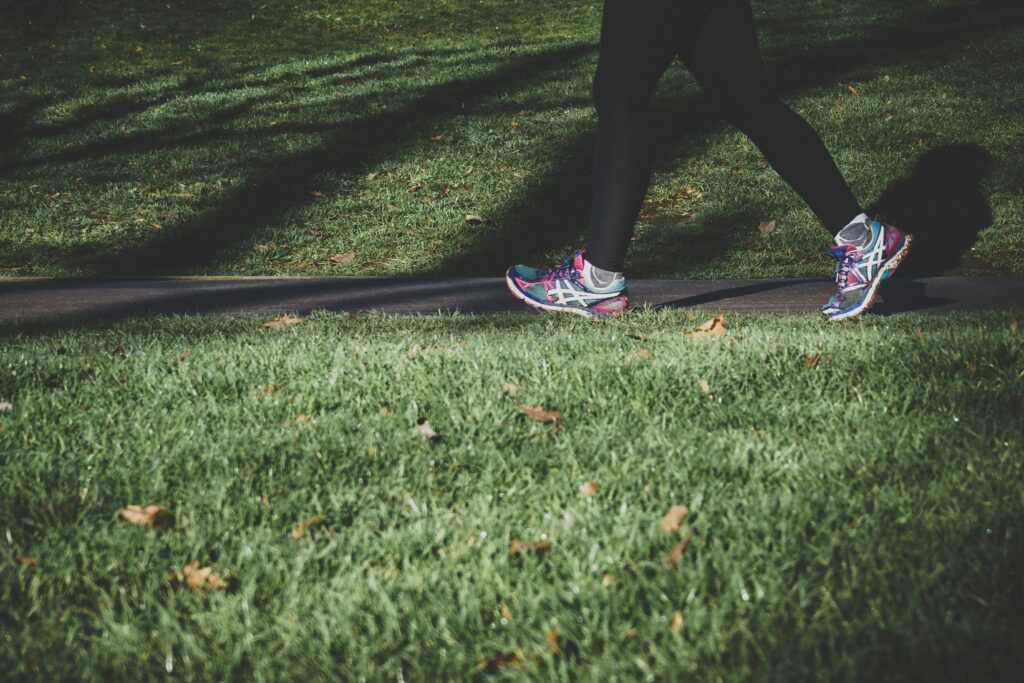
It’s worth knowing that “Japanese walking” isn’t its official name — it’s the nickname that stuck once the trend caught on online. The formal term is interval walking training, or IWT, and it was developed by exercise physiologists Hiroshi Nose and Shizue Masuki at Shinshu University Graduate School of Medicine in Matsumoto, Japan. Their work was first published in 2007, which means the method has had nearly two decades to be studied, replicated, and debated in scientific circles, rather than just a few viral weeks to prove itself. That history probably matters if you’re the type of person who likes to know a trend isn’t built on thin air before you invest your time in it, and it’s fair to feel more reassured knowing this.
The core idea is fairly modest, so there’s no need to overthink it before you start. Instead of walking at one steady pace the whole time, the way most of us do on a daily walk, you alternate between three minutes of brisk, faster-paced walking and three minutes of slower, easier walking. You repeat that cycle for about 30 minutes total, which usually works out to roughly five rounds. It borrows the same underlying logic as high-intensity interval training, or HIIT, just applied to something as ordinary and low-barrier as putting one foot in front of the other. If you’ve ever done interval training in running — think Couch to 5K programs — this will likely feel familiar, just gentler on the joints.
Why It Might Work Better Than Steady Walking

This is probably the part you actually came here for, so let’s get into it, though it helps to hold the claims loosely rather than treat them as settled fact. The general theory is that alternating intensity pushes your cardiovascular system harder than a steady pace does, without asking your joints to absorb the same relentless pounding that something like running would. During the brisk intervals, your heart rate climbs, and your muscles are asked to work meaningfully harder; during the slow intervals, you get a built-in recovery period, which may make the higher-intensity bursts more sustainable over a full 30-minute session than trying to sprint-walk the whole time would be.
Some of the research coming out of the original Shinshu University studies and subsequent follow-ups has reported improvements in peak aerobic capacity, blood pressure, and muscle strength among people who practiced interval walking consistently over several months, compared to those who walked at a steady pace or didn’t walk at all. There’s also more recent interest in whether it can help with blood sugar regulation, since the higher-intensity intervals seem to prompt greater glucose uptake in working muscles than a leisurely pace does. It’s worth being honest, though, that most of this research has focused on middle-aged and older adults, and results in that population won’t necessarily generalize perfectly to a 25-year-old marathoner or someone managing a chronic health condition. If you fall into either of those categories, or really any category where you’re not sure the research applies to you, it’s reasonable to check with a doctor before making changes to your exercise routine, especially if you’re new to more vigorous activity.
There’s also a psychological piece that seems to come up again and again in people’s actual experiences, even if it’s less rigorously studied than the physiological side. Walking at a single, unchanging pace for half an hour can get monotonous, and that monotony is often exactly what causes people to cut workouts short or skip them altogether. The intervals give you small, repeatable goals to chase — a faster three minutes here, a recovery three minutes there — which some people find makes the whole session feel less like a chore and more like a small, private competition against themselves. That’s obviously not something a study can fully quantify, but if boredom has ever been the reason you stopped walking regularly, it might genuinely be worth factoring in.
How You Might Actually Try It

If Japanese walking sounds appealing, the good news is that there’s very little barrier to entry, and you don’t need to get everything perfect on your first attempt for it to count. All you really need is a way to track roughly three-minute intervals — a phone timer, a smartwatch, or even just counting streetlights or landmarks works fine if you’d rather not stare at a screen while you walk.
A fairly standard approach looks something like this: walk at your normal, comfortable pace for three minutes, then pick up your speed to something noticeably brisker — not necessarily an all-out effort, but enough that carrying on a full conversation would start to feel a little harder — for another three minutes. Then drop back down to your slower recovery pace, and repeat that cycle for about five rounds, landing around 30 minutes total. If three full minutes of faster walking feels like too much right away, there’s nothing wrong with easing in — some experts suggest starting with just one minute of brisk walking followed by a longer recovery period, and gradually working your way up as your fitness improves.
It’s also worth saying that this doesn’t have to be an all-or-nothing, dedicated-workout-block kind of activity. Some people fold it into moments they’d otherwise spend just standing around, like pacing a parking lot while waiting to pick up their kids, rather than treating it as a separate appointment on the calendar. That flexibility might be part of why it’s caught on: it asks for consistency more than it asks for a big time commitment, which tends to be more sustainable for most people’s actual, busy lives.
A Reasonable Way to Think About It

None of this means Japanese walking is a magic fix, and it probably shouldn’t be treated as an automatic replacement for whatever exercise you already enjoy and stick with, since the best routine is usually the one you’ll actually keep doing. But if you’ve been walking the same loop at the same pace for months and feeling a bit stuck, or if you’re looking for a low-cost, low-equipment way to add some structure to your movement, this seems like a reasonably well-supported place to start. It’s simple enough to try this week, forgiving enough that you can scale it to your current fitness level, and grounded in research that predates the trend by nearly twenty years rather than springing from nowhere. Whether it becomes a lasting habit or just an interesting experiment probably says less about the method itself and more about whether it fits the shape of your actual life — and that’s a perfectly fine thing to figure out by simply giving it a try.