
Updated November 17, 2026.
Feeling some neuroses about the college admission cycle? The college admissions process often appears to be a chaotic endurance test, yet beneath the noise lies a structured and predictable multi-month journey. Successfully navigating this transition requires balancing genuine self-reflection with methodical discipline.
Here, we’ll offer you an attenuated overview of the college admission cycle, in order to clarify further common points of confusion.
Timeline of the Application Cycle
Phase 1: Junior Year (Spring)
The journey begins when high school juniors encounter the phrase “demonstrated interest” for the first time. They frantically subscribe to university mailing lists, opening marketing emails within six seconds of receipt to register either feigned or unfeigned interest in school.
This is the era of profile padding. Students discover a sudden, fervent passion for founding niche non-profit organizations or publishing research papers in dubious online journals, activities whose spurious nature is transparent to every admissions reader on earth.
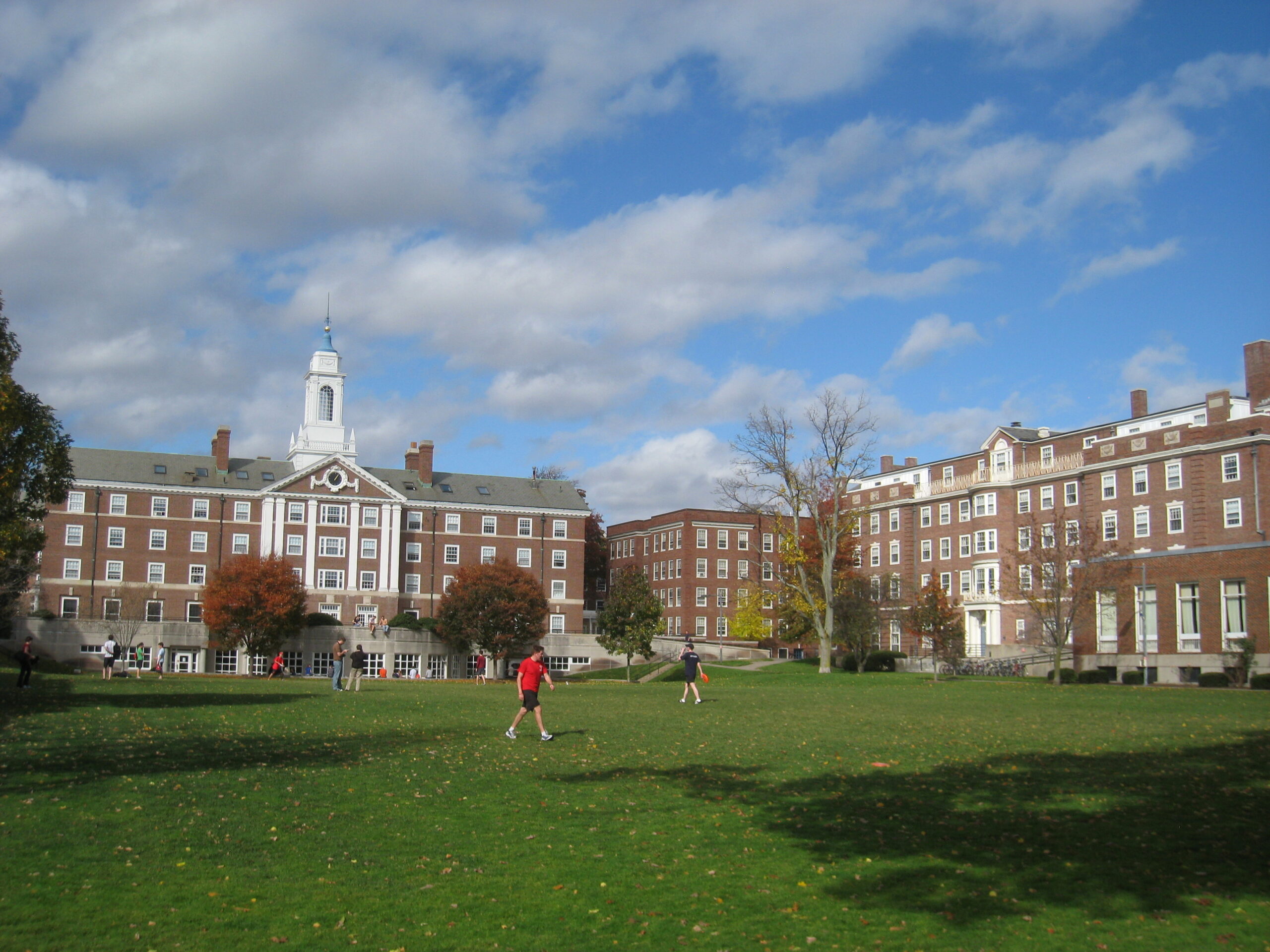
Campus tours promptly commence. Families wander across manicured quads while tour guides recite rehearsed anecdotes about campus traditions and the superb quality of on-campus cafeterias.
Phase 2: Senior Year (Fall)
As leaves turn, panic solidifies. The Common Application portal opens, demanding precise accounting of every award, honor, and extracurricular minute spent since ninth grade.
Early Decision (ED) and Early Action (EA) deadlines loom like execution dates. Be sure to make note of them, as many schools leverage the Common Application during their admission review. A notable exception is the UC system, which instead leverages its own platform, a common UC application that is disseminated to any UC of interest.
The Common Application consists of a single personal statement, in addition to various supplemental essays pertaining to a specific school if they require it. While many schools have abandoned standardized testing in their review process (SAT, ACT), it is still nevertheless used as a valuable metric for many institutions. Letters of recommendation are also frequently required. An additional section is available to enumerate involvement in extracurricular activities, community involvement, and conspicuous demonstrations of leadership.
Phase 3: Application Review (Winter)
Between November and March, your carefully curated existence sits on a digital server while admissions officers engage in what essentially consists of a file-reading marathon. Applications undergo initial reads, score assignments, and, for disputative cases, debate in committee rooms.
The institutional triage is brutal. A file might be discarded because a university over-enrolled violinists the previous year or because a tired regional reader skimmed your transcript late in a long day of reading. The review can be haphazard, which is why some universities, including the UC campuses and USC, employ an appeals process to re-review denied applicants who may merit further consideration.
Meanwhile, financial aid offices process CSS Profiles and FAFSA forms, determining how much aid can be offered to ameliorate tuition and your overall cost-of-attendance. Most schools harbor different criteria for their allotment of financial aid, so it is critical to remain mindful of filling out your FAFSA form, and to review critically the financial repercussions of attending any school of interest; as they will likely differ.
Phase 4: Decisions and Enrollment (Spring)
Decisions drop with finality in the Spring.
Then comes the waitlist—a psychological purgatory for students, admittedly; where colleges hold thousands of qualified candidates in reserve to hedge against yield unpredictability. If you are “wait-listed,” most institutions will request further information for consideration, so provide details relevant to achievements during your Senior Year, or achievements unmentioned on your initial application.
By May 1st (National Decision Day), deposits are placed, psychological defense mechanisms settle, and students have a clearer projection of what their future will entail.
Key Components of Holistic Review

1. Academic Transcript
Despite what glossy brochures claim about personal character, your transcript is the undisputed sovereign of the application. Contextualized course rigor (AP, IB, dual enrollment relative to what your high school actually offers) combined with consistent performance forms the unshakeable floor of admissions evaluation.
A 3.4 GPA wrapped in a narrative of profound personal awakening will rarely displace a 4.0 GPA achieved across twelve rigorous honors courses. Admissions offices are risk-averse; high grades in hard classes signal low risk of academic failure. While high school can be a tumultuous experience for many teens; universities will always prioritize, first and foremost, academic rigor and established academic performance.
Some systems, namely the UC, ask applicants to self-report their academic performance on their application. Once admitted to any UC, a student will have to submit official transcripts to verify presented scores. It is not wise to misrepresent oneself, as the consequences of falsification can reverberate to other schools you may have applied to.
2. Standardized Testing
The industry’s posture on standardized testing resembles a chronic neurosis. While numerous institutions maintain test-optional policies, highly selective programs have swung back toward test-required mandates after discovering that high school grade inflation rendered transcripts increasingly homogenous.
In some test-optional environments, submitting a score in the upper quartile of a school’s middle-50% range remains a pronounced advantage. In test-blind environments, like the UC system, the SAT or ACT is truly a negligible consideration; it’s not even presented as an option for submission on the application.
3. Personal Statement and Essays
Admissions committees are drowning in a sea of synthetic homogeneity. The widespread adoption of generative AI has led to an explosion of polished, emotionally hollow prose that experienced readers can spot within seconds.
Beyond the immediate risk of detection, seasoned readers can detect the cadence of AI rather than the prose of a teenager applying to university. There is also a structural barrier: applicants who submit through the Common Application must certify, under its fraud policy, that all submitted writing is their own original work, and many universities add their own attestation. Submitting AI-generated copy risks immediate disqualification. The primary objective of the personal statement remains unchanged: proving an authentic human voice with an unvarnished presentation of one’s experiences and ambitions.
4. Extracurricular Activities
The era of the “well-rounded student” has yielded to the age of the “angular student.” Admissions committees actively seek candidates who demonstrate deep, sustained impact within two or three focused areas rather than superficial participation across ten distinct clubs. Quality, in other words, is far more profound than quantity.
Listing membership in five honor societies and three volunteer groups communicates an inability to prioritize. Leading a singular, meaningful initiative that alters your local community signals impressive executive function that universities value.
Practical Strategies for Applicants

Strategy 1: Build a Balanced College List
Construct an application list anchored in mathematical reality rather than prestige-seeking delusion:
- 2 Safety/Likely Schools: Institutions where your academic metrics put you comfortably above the 75th percentile and acceptance rates exceed 50%.
- 3 to 4 Target Schools: Institutions where your metrics align with the middle 50% and acceptance rates hover between 20% and 45%.
- 2 to 3 Reach/Far Reach Schools: Institutions with single-digit or low double-digit admit rates where admissions decisions are functionally stochastic for almost everyone.
Strategy 2: Ensure Application Narrative Coherence
Your application should function as a single, coherent narrative ecosystem. If your intended major is Computer Science, but your recommendations or extracurricular involvement emphasize your passion for historical fiction; your personal narrative becomes disjunctive and less compelling.
Align your essays, recommendations, and activity descriptions so they tell the same fundamental story about your personal and intellectual trajectory.
Strategy 3: Evaluate Early Application Options
Early Decision provides a tangible mathematical bump at institutions that rely heavily on ED to secure yield. However, never apply ED unless you are entirely certain of the fit and have utilized the school’s Net Price Calculator to verify financial feasibility.
Binding agreements eliminate your leverage to compare financial aid offers across multiple institutions, however, which is something to be cognizant of.
Strategy 4: Secure Strong Recommendation Letters
Do not solicit letters of recommendation from teachers based solely on the letter grade you received in their class. Seek out educators who witnessed you grapple with difficult concepts, assist peers, or demonstrate intellectual curiosity beyond the syllabus.
Provide your recommenders with a concise “brag sheet” highlighting specific projects, papers, or classroom moments you shared, enabling them to write detailed anecdotes rather than generic praise. Displaying initiative, even in the commerce of acquiring valuable and worthwhile letters of recommendation, is never a bad thing.
Frequently Asked Questions
I. Does “Test-Optional” Actually Mean Test-Optional?
Yes, but with significant caveats. At regional public universities and less selective private colleges, test-optional policies are genuinely neutral. However, at highly selective institutions, submitting a strong score provides a distinct academic data point that validates your transcript (the asterisk being the UC system).
If your test score sits within or above the institution’s published middle-50% range, submit it. If it falls significantly below, opt out and allow your transcript and course rigor to carry the academic weight.
II. How Do Admissions Officers View AI in Application Essays?
With zero tolerance and immediate skepticism. The Common Application requires applicants to certify, under its fraud policy, that all essays are entirely their own original writing, and many universities add their own attestation.
Furthermore, college admission readers evaluate thousands of files per cycle and have developed an exceptionally refined ear for AI syntax. Submitting AI-generated prose not only violates signed honor codes, but the lack of authentic voice is easily perceived by readers, leading to immediate file triage. Again, it is important to keep in mind admission readers and officers are reviewing hundreds of applications, and using AI as a veneer for your own shoddy prose will quickly render you disqualified; even if your academic credentials are impressive.
III. What Is “Demonstrated Interest” and How Do I Show It?
Demonstrated interest measures how likely an applicant is to enroll if accepted, protecting an institution’s yield metric. Selective private institutions track virtual tour attendance, email click-through rates, campus visits, and attendance at regional representative info sessions.
The most critical venue for demonstrating interest during college admission, however, is the “Why Us?” supplemental essay. Specificity regarding faculty research, specialized equipment, unique academic programs, and campus culture proves you have done genuine research rather than copy-pasting generic compliments.
If you are interested in a specific campus, do the requisite research, and be sure to articulate precisely why a particular institution offers a compelling reason for attendance. The more specific the reason, the better.
IV. How Important Are Letters of Recommendation Really?
Letters of recommendation serve as external validation of your classroom character, intellectual curiosity, and interpersonal citizenship. A generic letter stating you were a “hardworking, polite student who earned an A” does little to advance your file.
Recommendations that recount specific anecdotes of your problem-solving abilities, engagement in seminar discussions, or resilience during challenging assignments provide immense qualitative value during committee debates.
V. What Happens If I Get Deferred or Waitlisted?
A deferral (from early to regular decision) means you remain under active consideration. You should submit a concise Letter of Continued Interest (LOCI) detailing any notable academic achievements, awards, or updated semester grades earned since your initial submission.
A waitlist offer (issued during regular decision) requires you to formally accept your spot on the waitlist while immediately securing an enrollment deposit at an institution to which you have been accepted. Waitlist movement is highly unpredictable and depends entirely on how many admitted students accept their offers by May 1st.